
Tax Defense ✦ Installment Agreements & CNC
A Payment Plan You Can Actually Live With.
The IRS accepts millions of installment agreements, but the difference between a survivable plan and a payroll-crushing one is how it’s negotiated. North Star Law Firm sets up payment plans and hardship status for New Mexico taxpayers, sized to the IRS’s own rules instead of its opening ask.
The Landscape
What are your options when you can’t pay in full?
I.R.C. § 6159 authorizes the IRS to accept payment over time, and the agency’s own streamlined programs approve most individual requests under published balance thresholds with minimal financial disclosure. Above the thresholds, or for businesses, the negotiation runs on full financial statements, and every number is tested against the IRS collection standards. The right plan stops levies, keeps the government off your employer’s fax machine, and fits inside your actual budget.
And when the honest answer is that there is no room in the budget at all, the correct tool is currently-not-collectible status: enforced collection stops, the ten-year clock keeps running, and many CNC debts simply expire. Paying something is not always the right answer; paying the legally required amount is.
Pick the Right Vehicle
Which arrangement fits your balance and budget?
| Arrangement | Who it fits | The trade |
|---|---|---|
| Guaranteed / streamlined agreement | Individuals under the published balance thresholds | Fast setup, minimal disclosure; must full-pay within the statute |
| Ability-to-pay agreement | Larger balances; businesses | Full financials; payment set by the collection standards, not by fear |
| Partial-pay installment agreement | Taxpayers who can pay something but never everything | Pays what the financials support; the statute extinguishes the rest; periodic reviews |
| Currently-not-collectible | No ability to pay after allowable expenses | Collection stops; the clock runs; refunds offset; periodic re-review |
Why do so many payment plans default?
Because they were sized by panic instead of math. Taxpayers agree to numbers the IRS suggests, skip the expense analysis, and discover in month four that the plan competes with rent. A default makes everything worse: reinstatement fees, resumed enforcement, and a harder negotiation the second time. The professional version starts from the collection financial standards, claims every allowable expense, and prices the plan to survive a bad month.
What’s the strategy angle a calculator can’t see?
The collection statute. Every balance has an expiration date, and the interplay between plan size and remaining statute is where real money hides. A partial-pay agreement on a debt with four years left may cost a fraction of full payment. CNC status on an old balance may cost nothing at all. That analysis takes transcripts and someone who reads them, which is the first thing we pull in every engagement.
The Attorney-CPA Difference
The IRS negotiates payment plans every day. Now you have someone who does too.
- Plans priced from the IRS collection standards, with every allowable expense claimed
- Partial-pay and CNC strategy driven by the collection statute dates on your transcripts
- Levy releases coordinated so the plan starts with your paycheck whole
- New Mexico TRD payment agreements negotiated alongside the federal plan
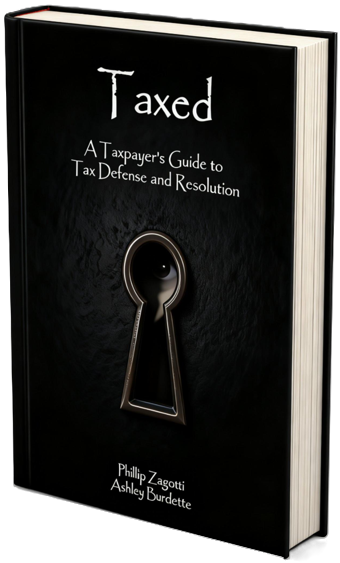
Proof, In Print
He wrote the book on tax defense. Literally.
Phillip Zagotti co-authored Taxed: A Taxpayer’s Guide to Tax Defense and Resolution with Ashley Burdette, a plain-English guide to audits, IRS collections, and the resolution tools described on this page. If you want to understand your situation before you call anyone, or you’d rather work the problem yourself first, start with the book. When you decide you want a professional in your corner, the consultation is free.
Questions & Answers
Payment plan and hardship questions, answered
Will a payment plan stop a levy?
Yes. Approval of an installment agreement generally requires release of active wage levies, and proposing one in good faith typically holds new enforcement while it’s considered. It is often the fastest sustainable route out of a garnishment.
Do penalties and interest stop during a plan?
Interest continues, and the failure-to-pay penalty continues at a reduced rate. That’s why plan structure matters: the goal is the lowest lawful monthly payment that still beats the accrual math, or a strategy that lets the statute do the heavy lifting.
What is currently-not-collectible status, really?
A formal IRS determination that you have no ability to pay after allowable living expenses. Enforcement stops, the account is shelved, and the ten-year collection clock keeps running. It is reviewed periodically, and refunds are kept, but for genuinely strapped taxpayers it is the correct answer, not a trick.
Can a business with payroll tax debt get an agreement?
Yes, though the rules are tighter and the stakes higher, because trust-fund taxes carry personal liability for owners and officers. Business collection cases move fast and deserve representation from the first revenue officer contact.
Will the IRS file a lien if I get a plan?
It depends on the balance and the structure. Direct-debit agreements on qualifying balances can avoid a lien filing or support withdrawal of one already filed, which is a major reason structure matters beyond the monthly number.
Pay what the rules require. Not what panic suggests.
Free consultation with an attorney-CPA: your transcripts, your statute dates, and the payment structure that actually fits.