
Tax Defense ✦ Tax Court Litigation
Fight the IRS Before You Pay. That’s What Tax Court Is For.
The U.S. Tax Court is the only forum where you can contest a tax deficiency before paying it, and your ticket in expires 90 days after the notice. Phillip Zagotti is admitted to the U.S. Tax Court and represents New Mexico taxpayers from petition through decision.
The Prepayment Forum
Why does Tax Court matter so much?
When an audit ends in disagreement, the IRS issues a Statutory Notice of Deficiency, the 90-day letter. Under I.R.C. § 6213, filing a Tax Court petition within 90 days stops assessment and collection until the case is decided, and you argue about the tax before paying it. Miss the window and the deficiency is assessed; your remaining route is paying in full and suing for a refund, a materially worse position for most people. The 90 days are jurisdictional. Courts cannot extend them for good intentions.
Tax Court judges hear nothing but tax, travel to hear cases (Albuquerque is a regular session city), and the vast majority of docketed cases settle with IRS counsel or Appeals before trial, usually on better terms than the exam produced. Filing the petition is less a declaration of war than the price of a real negotiation.
Choose Your Track
Regular case or small tax case?
| Track | Limit and rules | Trade-offs |
|---|---|---|
| Small tax case (S case) | Disputes of $50,000 or less per year; simplified procedure | Faster, informal, less costly; no appeal from the decision |
| Regular case | Any amount; full rules of evidence and procedure | Appealable; fits larger deficiencies and issues of law worth preserving |
| CDP review | Appeals collection determinations | The court reviews the hearing record; another reason the hearing file matters |
What actually happens after you petition?
The case goes first to IRS Chief Counsel, and typically back to Appeals if it hasn’t been there, where most cases settle on hazards of litigation. Discovery in Tax Court is informal by design: the parties exchange documents and stipulate facts, and trials, when they happen, are bench trials before a judge who knows the Code. Our cases are built backward from that judge: the documentation, valuation support, and legal authority assembled as if trial were certain, which is precisely what produces settlements that make trial unnecessary.
Where does the attorney-CPA advantage show up in litigation?
Tax trials are document trials. Substantiation, reconstructions, basis computations, and expert-grade financial narrative decide them, and having the advocate who examines witnesses also be the professional who built the numbers removes the translation loss that plagues two-professional teams. It also means honest case assessment early: some deficiency notices deserve a fight, some deserve a negotiated concession, and telling the difference before you spend a year litigating is the cheapest advice in tax.
The Attorney-CPA Difference
Admitted to the court. Fluent in the numbers. One advocate, whole case.
- Petitions filed inside the jurisdictional 90 days, with the record built from day one
- Settlement leverage through Appeals and Chief Counsel, where most cases resolve
- S-case versus regular-case strategy matched to the dollars and the issues
- Trial-ready financial exhibits prepared by the same professional who argues them
Proof, In Print
He wrote the book on tax defense. Literally.
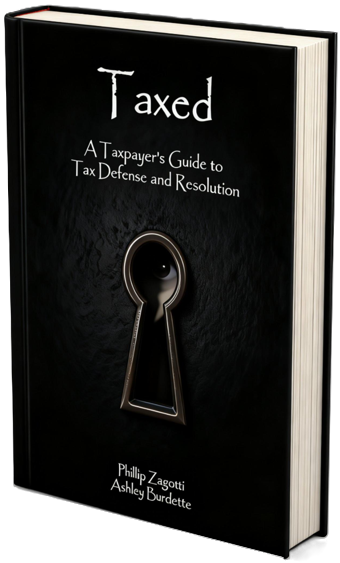
Phillip Zagotti co-authored Taxed: A Taxpayer’s Guide to Tax Defense and Resolution with Ashley Burdette, a plain-English guide to audits, IRS collections, and the resolution tools described on this page. If you want to understand your situation before you call anyone, or you’d rather work the problem yourself first, start with the book. When you decide you want a professional in your corner, the consultation is free.
Questions & Answers
Tax Court questions, answered
How much does it cost to file a Tax Court petition?
The court’s filing fee is modest, and the petition itself is short. The real investment is the case behind it, which is why we quote flat fees by phase: petition and settlement posture first, trial preparation only if the case actually needs it.
Do I have to travel to Washington for my case?
No. The Tax Court rides circuit, hearing New Mexico cases in Albuquerque in regular sessions, and many conferences and even trials proceed remotely. Your case stays effectively local.
What are the odds my case settles?
The strong majority of petitioned cases settle before trial, most through Appeals on hazards of litigation. Filing the petition is frequently what converts a stubborn exam position into a realistic negotiation.
I missed the 90-day deadline. Is everything lost?
The prepayment forum is lost, but not every remedy. Audit reconsideration, offers based on doubt as to liability, and full-payment refund litigation remain, and collection alternatives are always available. The options are worse, which is exactly why the 90-day letter should reach counsel the day it arrives.
Can you also handle IRS collection cases in Tax Court?
Yes. Collection due process determinations are reviewable in Tax Court, and those cases are won on the record made at the hearing, which is why our CDP hearings are built with the court in mind from the start.
Ninety days. Then the door closes.
If a Notice of Deficiency is in your hands, the free consultation happens this week, not next month. Bring the notice; we’ll bring the strategy.