
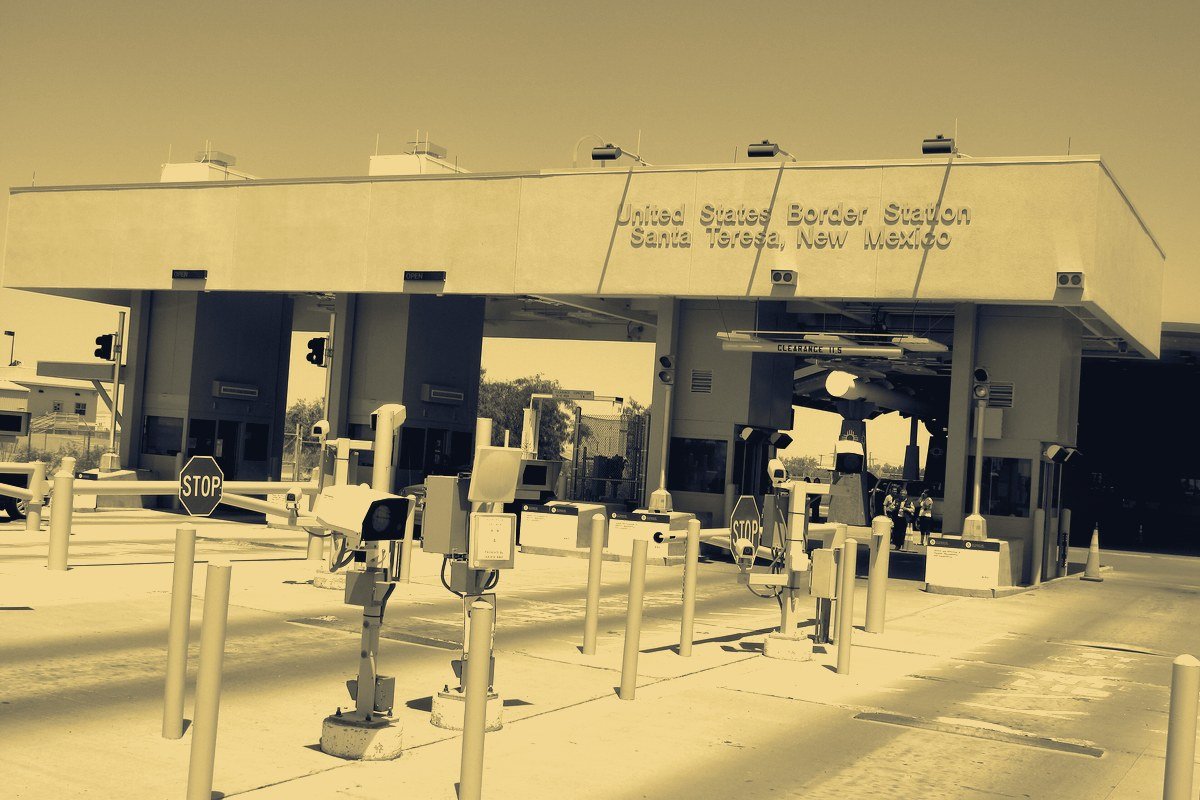
A Santa Fe gallery pays a sculptor in Oaxaca for a commissioned piece. An Albuquerque software firm brings on a developer in Warsaw as a contractor. A Las Cruces produce broker pays a Chihuahua trucking company for cross-border hauls. Each payment raises the same quiet question, and most small businesses answer it wrong or not at all: should this payee have given us a Form W-9 or a Form W-8, and were we supposed to withhold tax before sending the money? Get it right and the paperwork takes minutes. Get it wrong and the IRS can hold the New Mexico business liable for tax it never withheld from money it already paid out, plus penalties and interest. This evergreen corner of tax compliance deserves a permanent place in every onboarding checklist.
What are Forms W-9 and W-8, and who gives you which?
Both forms tell a payor how to handle reporting and withholding, and both certify the payee’s status. Form W-9 comes from U.S. persons: citizens, resident aliens, and entities organized in the United States, including a U.S. citizen freelancer living abroad, a status people routinely get wrong. It supplies the taxpayer identification number that feeds 1099 reporting. The W-8 family comes from foreign persons and does two jobs: it certifies non-U.S. status, and it is the vehicle for claiming exemptions or treaty rate reductions. The main variants are W-8BEN for foreign individuals, W-8BEN-E for foreign entities, W-8ECI for income effectively connected with a U.S. trade or business, W-8EXP for foreign governments and exempt organizations, and W-8IMY for intermediaries and flow-through entities. The payee picks the form; the payor’s job is to collect it before the first payment, review it for obvious defects, and keep it on file.
When must a New Mexico business withhold on payments to foreign payees?
The default rule is blunt. Payments of U.S.-source fixed or determinable annual or periodical income, the FDAP category that includes interest, dividends, rents, royalties, and compensation for services performed in the United States, made to a foreign person are generally subject to 30 percent withholding at the source under 26 U.S.C. § 1441. The payor withholds, deposits, and reports on Forms 1042 and 1042-S. Two big pressure valves exist. Income effectively connected with the payee’s U.S. business, certified on a W-8ECI, escapes the 30 percent regime because the payee will report it on a U.S. return. And tax treaties, which the United States maintains with more than 60 countries, can cut the rate on many income types, sometimes to zero, but only if the payee affirmatively claims the treaty on a valid form; individuals claiming treaty benefits on personal services compensation generally need Form 8233 rather than a W-8 alone. Source matters enormously: compensation for services is sourced where the services are performed, so paying a developer who works entirely from Poland is generally foreign-source income outside FDAP withholding, while flying the same developer to Albuquerque for a month changes the analysis.
What happens when no form is collected at all?
The code fills the silence with presumptions that favor the Treasury, never the payor. Miss a W-9 from a U.S. payee and backup withholding at 24 percent applies under 26 U.S.C. § 3406. Lack a valid W-8 from a foreign payee and the 30 percent rate applies with no treaty relief. The trap is that these are the payor’s liabilities: a business that should have withheld and did not can be assessed the uncollected tax itself, on top of penalties for unfiled 1042-S or 1099 reporting and, for treaty claims it accepted carelessly, exposure for under-withholding. The payee can often recover over-withheld amounts by filing a U.S. return, but the payor rarely recovers what it failed to withhold from someone an ocean away. In an audit, the examiner’s first request is simply the vendor file: no forms, no defense.
Which mistakes show up most in small-business vendor files?
Five patterns account for most of the damage. Treating every vendor as domestic because the invoice is in dollars and the English is fluent, so no one ever asks for a W-8. Accepting a W-9 from a foreign contractor who filled out the familiar-looking form by mistake, which misroutes the account into 1099 land and skips required withholding. Assuming treaty benefits apply automatically because the payee’s country has a treaty, when the payee never claimed it on a valid form, and never filed the Form 8233 that individual service providers need. Ignoring expiration, since W-8BEN forms generally lapse after the third full calendar year and a stale form is no form. And overlooking U.S. citizens abroad, who must give a W-9 no matter where they live, because citizenship, not address, controls U.S.-person status. Every one of these is cheap to fix at onboarding and expensive to fix in examination.
How should a New Mexico business build its onboarding process?
Make the tax form a gate, not an afterthought: no vendor gets paid until the right form is in the file. Ask every new payee for a W-9 or the appropriate W-8, and say plainly that foreign payees use W-8s, because many first-time foreign vendors have never seen one. Check tax residency rather than assuming from mailing address or bank location, and validate TINs on W-9s through IRS matching. For foreign service providers, document where the work physically happens, since that fact drives sourcing, and collect Form 8233 when an individual claims treaty benefits on U.S.-performed services. Calendar W-8 expirations. And when payments will be large or recurring, price the compliance into the relationship up front: registering for Form 1042 reporting, or restructuring so the work is performed abroad, is far easier before the first payment than after the third audit notice. A borderland economy runs on cross-border relationships; the businesses that thrive in it treat withholding forms the way they treat gross receipts tax registration, as basic plumbing.
| Payee situation | Correct form | Default withholding if form is missing or invalid |
|---|---|---|
| U.S. citizen or resident contractor, any address worldwide | W-9 | 24 percent backup withholding |
| Foreign individual, services performed outside the U.S. | W-8BEN | Generally foreign-source; documentation still prudent |
| Foreign individual, services performed in the U.S., treaty claim | W-8BEN plus Form 8233 | 30 percent on U.S.-source compensation |
| Foreign company with a U.S. branch or trade or business | W-8ECI | 30 percent on FDAP absent the certification |
| Foreign partnership or intermediary receiving for others | W-8IMY with underlying documentation | 30 percent, presumption rules apply |
Frequently Asked Questions
What is the difference between Form W-9 and Form W-8?
A W-9 certifies that the payee is a U.S. person and supplies the TIN used for 1099 reporting. The W-8 series certifies foreign status and carries any claim of exemption or treaty rate reduction that limits the default 30 percent withholding.
Do I withhold when paying a contractor who works entirely in Mexico?
Compensation is sourced where services are performed, so pay for work done entirely outside the United States is generally foreign-source and outside FDAP withholding. Collect a W-8BEN anyway to document the foreign status behind that conclusion.
What if my vendor never returns a W-9?
Backup withholding at 24 percent applies to reportable payments under 26 U.S.C. § 3406, and the business that fails to withhold can be held liable for the amount itself along with information-reporting penalties.
Do tax treaty rates apply automatically?
No. The payee must claim the treaty on a valid W-8, and individuals claiming treaty benefits on compensation for U.S.-performed services generally must also provide Form 8233. Without the paperwork, the payor must withhold at the full statutory rate.
How long does a Form W-8BEN remain valid?
Generally through the end of the third full calendar year after signature, unless a change in circumstances makes it incorrect sooner. Calendar the expirations, because payments made on a lapsed form are treated as undocumented.
Can a U.S. citizen living abroad give me a W-8?
No. U.S. citizens are U.S. persons wherever they live and must provide a W-9. A W-8 from someone you know to be a U.S. citizen is invalid on its face.
How North Star Law Firm Can Help
North Star Law Firm builds withholding and information-reporting compliance for New Mexico businesses that pay across borders, from vendor onboarding design and treaty documentation to cleanup when years of payments went out with no forms on file. Phillip Zagotti, JD/CPA, handles the intersection of international payments and federal tax exposure, and the firm’s international tax practice pairs with its audit defense practice when the IRS asks for the vendor file, and with its penalty abatement practice when reporting lapses have already priced themselves. Contact North Star Law Firm before the next foreign vendor is onboarded, and turn a recurring audit risk into a five-minute checklist item.