
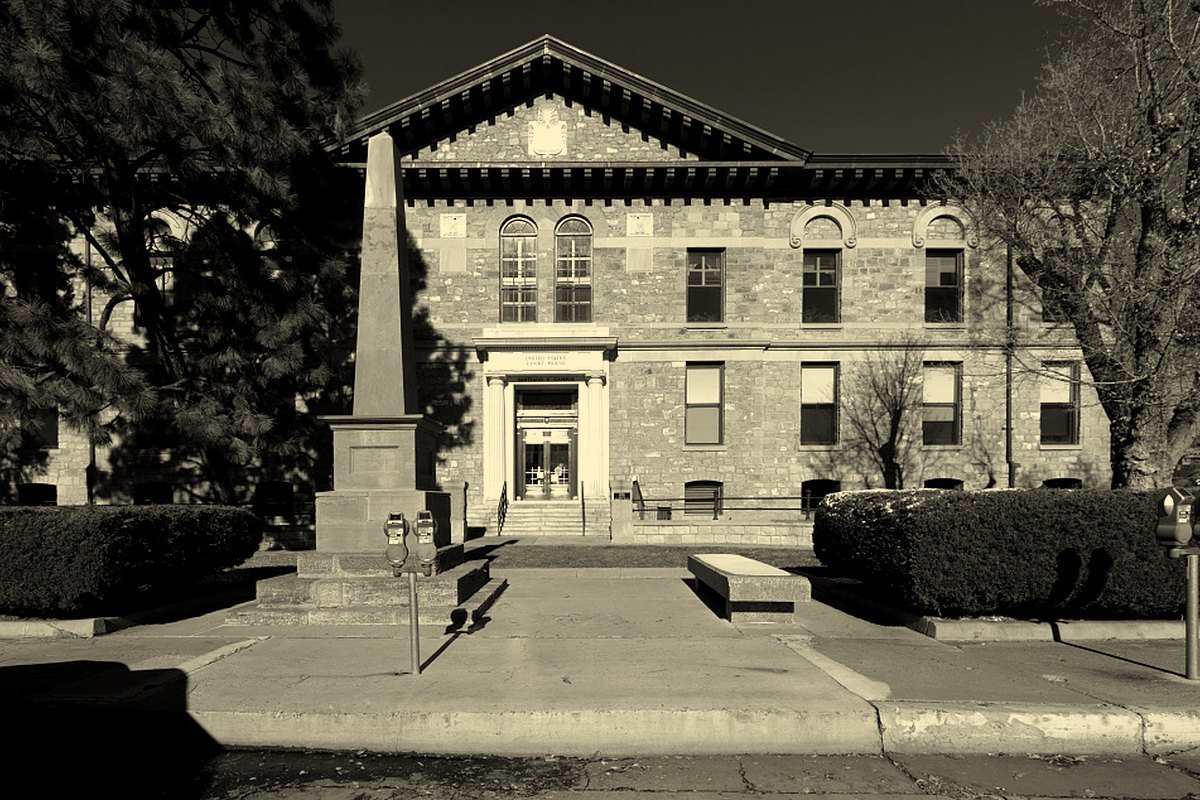
Two contractors who rebuilt a commercial building off Cerrillos Road in Santa Fe have waited two years for trial. Six days before the setting, the LLC that owns the building files a Subchapter V petition, and the automatic stay freezes the lawsuit. The contractors call it a bad faith bankruptcy filing and want the case thrown out.
A June 2026 Washington, D.C. bankruptcy ruling, In re JPK Newco, LLC, kept a similar case alive under Carolin Corp. v. Miller, 886 F.2d 693 (4th Cir. 1989), which permits dismissal only if reorganization is hopeless on objective grounds and the debtor’s motive was improper. New Mexico sits in the Tenth Circuit, where no court has adopted that two-part test and every circumstance is weighed together.
Can a creditor get a New Mexico bankruptcy dismissed for bad faith?
Yes, though the statute never says “bad faith.” Under 11 U.S.C. § 1112(b)(1), once a party shows cause, the court must convert a Chapter 11 case to Chapter 7 or dismiss it, whichever is better for creditors and the estate, unless appointing a trustee or examiner under § 1104(a) would serve them better. Section 1112(b)(4) lists sixteen kinds of cause. Bad faith is not among them, but Hall v. Vance, 887 F.2d 1041 (10th Cir. 1989), holds the list is not exhaustive. In re Pacific Rim Investments, LLP, 243 B.R. 768 (D. Colo. 2000), treats a bad faith petition as cause, and Judge Thuma followed it in In re Jet Sales West LLC, No. 20-12179-ta11 (Bankr. D.N.M. Dec. 15, 2021).
The remedy matters: dismissal sends everyone back to state court, while conversion hands the building to a Chapter 7 trustee.
What test does the Tenth Circuit use for a bad faith bankruptcy filing?
None, formally. Its leading published decisions on bad faith Chapter 11 petitions are sanctions appeals. In Jones v. Bank of Santa Fe (In re Courtesy Inns, Ltd.), 40 F.3d 1084 (10th Cir. 1994), a one-asset motel company filed the day before a foreclosure sale; in Udall v. FDIC (In re Nursery Land Development, Inc.), 91 F.3d 1414 (10th Cir. 1996), an entity took a quitclaim deed the day before the FDIC’s sale and filed a handwritten petition the same day, the pattern lawyers call new debtor syndrome. The court listed seven “classic badges” of bad faith, including a single asset, a single creditor, no employees, and no reasonable possibility of reorganization.
Futility is one badge among seven, not a separate hurdle. In Pacific Rim, the debtor owned one Denver office building and filed three days before a foreclosure trial; the bankruptcy judge found equity and a proposed plan and dismissed anyway. Affirming, the district court said bad faith is judged on all the circumstances together, with no factor dispositive, and an ability to reorganize does not bar dismissal. The Tenth Circuit BAP took the same approach in In re Muth, BAP No. CO-13-055 (10th Cir. BAP May 1, 2014) (unpublished).
Put plainly, a New Mexico creditor need not prove objective futility as its own element. Jet Sales West weighed eight factors, including whether the problem is a two-party dispute the pending state case could resolve.
Facing a Bad Faith Bankruptcy Motion? Contact Us Now
Is it bad faith to file bankruptcy to stop a lawsuit in New Mexico?
Not by itself. In In re LTL Management, LLC, 64 F.4th 84 (3d Cir. 2023), dismissed for lack of financial distress, a footnote borrowed a Seventh Circuit line that seeking an advantage from bankruptcy is not bad faith, since that is why anyone files. The Tenth Circuit has said nothing comparable, and in-circuit rulings point both ways. Pacific Rim affirmed dismissal where the debtor was running from discovery sanctions and a trial date, conduct the judge likened to forum shopping. Jet Sales West gave a tactical motive slight weight because the Roswell debtor also needed to stop El Paso from seizing its jets.
In my experience the deciding question is what else the bankruptcy accomplishes. When the plaintiffs are the only real creditors, it starts to look like Pacific Rim. Chief Judge Jacobvitz struck a cautionary note in In re Golden, No. 25-10646-j13 (Bankr. D.N.M. Mar. 12, 2026), a Chapter 13 stay ruling, saying the doctrine should be used sparingly.
How fast does a Chapter 11 dismissal for cause motion move?
Fast. Section 1112(b)(3) requires the hearing to begin within 30 days after the motion is filed and a ruling within 15 days after it starts, absent the movant’s express consent to a set continuance or compelling circumstances.
The debtor’s escape hatch, § 1112(b)(2), requires specifically identified unusual circumstances, a reasonable likelihood of timely confirmation, and a justified, curable lapse. It fits a late report better than a bad faith petition; the Third Circuit refused to apply it in LTL.
Pacific Rim also held bad faith is cause for stay relief under § 362(d)(1), and under § 362(e)(1) the stay lapses 30 days after the request unless the court continues it after a hearing. A trustee motion is a middle path. In In re New Mexico Terminal Services, LLC, No. 25-11291-j11 (Bankr. D.N.M. Mar. 13, 2026), an Albuquerque single asset real estate case, the court denied a bank’s § 1104 motion but promised a trustee if the debtor missed plan deadlines.
Does Subchapter V change the bad faith analysis in New Mexico?
I found no Tenth Circuit, BAP, or District of New Mexico opinion applying a different bad faith test in Subchapter V. What changes is the clock. Section 1189(b) requires the debtor’s plan within 90 days after the order for relief, extended only for circumstances the debtor should not justly be held accountable for. Section 1185(a) lets the court remove a dishonest or mismanaging debtor in possession, and § 1183(b)(5) lets the Subchapter V trustee run the business. Creditors can contest feasibility at confirmation under § 1191.
Eligibility is often the stronger attack. Section 1182(1) limits Subchapter V to a small business debtor under § 101(51D), capped at $3,424,000 of noncontingent, liquidated debt since April 1, 2025, per a February 2025 Federal Register notice. Disputed claims are their own fight; see the firm’s post on Subchapter V eligibility and contingent debt. The definition also excludes anyone whose primary activity is owning single asset real estate. Congress passed H.R. 7730 on September 28, 2026 to restore a $7,500,000 cap; as of October 9 it awaited the President’s signature, and it keeps the real estate exclusion. Objections to the designation go under Fed. R. Bankr. P. 1020(b), within 30 days after the meeting of creditors concludes.
What would the creditors do if a Santa Fe LLC files Subchapter V six days before trial?
Every name, number and date here is hypothetical. Cerrillos Commercial LLC owns one Santa Fe building worth about $4.2 million, leased to five tenants, with a $2.6 million bank mortgage. Two contractors claim $900,000 and $450,000, disputed, with trial set in Santa Fe County district court for Monday, November 16, 2026. The LLC files on Tuesday, November 10, which under § 301(b) is the order for relief.
On November 16 the contractors move to dismiss and for stay relief. The court must open the dismissal hearing by Wednesday, December 16 and rule by Thursday, December 31; the stay motion hits its 30-day mark December 16. If the creditors’ meeting concludes December 9, a Rule 1020(b) objection is due January 8, 2027.
The bad faith factors split, so eligibility may be the better card. If the disputed claims are unliquidated, debt is about $2.6 million; if they count, $3.95 million exceeds the cap. Either way, if rents are substantially all of the LLC’s income and it does nothing but operate the building, it is single asset real estate and outside Subchapter V. In ordinary Chapter 11, the bank gains the § 362(d)(3) clock: by February 8, 2027, or 30 days after a single asset ruling if later, the LLC must file a plan with a reasonable possibility of confirmation or begin monthly interest at the nondefault contract rate on the value of the bank’s interest. A surviving Subchapter V plan is due that same day.
| Creditor tool | Source | Clock | Possible result |
|---|---|---|---|
| Motion to dismiss or convert | 11 U.S.C. § 1112(b) | Hearing within 30 days, ruling 15 days later | Dismissal, conversion, or a trustee |
| Relief from stay | § 362(d)(1), (e)(1) | Stay lapses 30 days after request unless continued | State court trial resumes |
| Subchapter V designation objection | Rule 1020(b); § 101(51D) | 30 days after the creditors’ meeting ends | Ordinary Chapter 11 |
| Single asset real estate relief | § 362(d)(3) | 90 days after petition, or 30 days after the ruling | Plan or monthly interest, or stay relief |
| Remove debtor in possession | § 1185(a); § 1104(a) | No fixed deadline | Trustee operates the business |
Frequently Asked Questions
Does the Tenth Circuit follow the Carolin two-part test?
No published Tenth Circuit decision adopts it. The circuit treats lack of a realistic reorganization as one badge among several, and courts within it weigh every circumstance together.
Can a New Mexico business file bankruptcy to stop a lawsuit?
Yes, if the case also serves a real reorganization purpose. A filing aimed only at escaping a trial date, with the plaintiffs as the only meaningful creditors, invites a motion to dismiss.
How long does a motion to dismiss a Chapter 11 case take in New Mexico?
The hearing must start within 30 days after filing, with a ruling 15 days later. A continuance the movant agrees to, or compelling circumstances, can stretch it.
Can a one-building LLC use Subchapter V?
Often not. The small business debtor definition excludes a person whose primary activity is owning single asset real estate. An LLC running its own operating business in the building may still qualify.
Is the Subchapter V debt limit $7.5 million again?
Not yet. The cap is $3,424,000 today. Congress passed H.R. 7730 to restore $7,500,000, but as of October 9, 2026 it was unsigned, and it would apply only to cases filed after enactment.
How North Star Law Firm Can Help
North Star Law Firm represents business owners and creditors in New Mexico Chapter 11 cases, including dismissal, stay relief, and eligibility disputes in Subchapter V, as part of its bankruptcy practice.
Phillip Zagotti, JD/CPA, is admitted to the U.S. District Court and Bankruptcy Court for the District of New Mexico and represents taxpayers before the IRS and the U.S. Tax Court. The firm works alongside New Mexico-licensed counsel on state-law questions. If a bankruptcy petition has stopped your lawsuit, or a creditor is calling your filing bad faith, contact North Star Law Firm.