
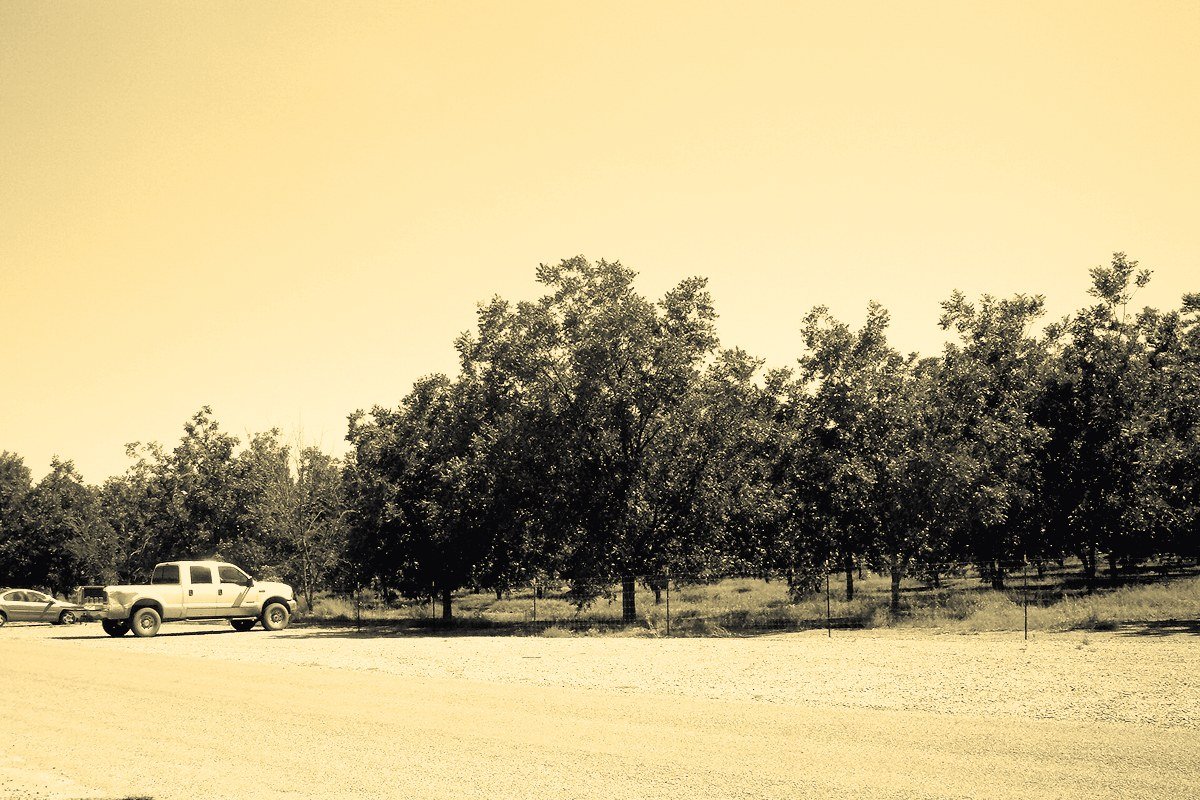
A ranch outside Roswell, a pecan orchard in the Mesilla Valley, or a royalty interest in Lea County all share one tax feature: sell it and buy other United States real estate inside a tight window, and the federal gain can be deferred under 26 U.S.C. § 1031. New Mexico follows along. The mechanics are simple but unforgiving. Miss a day, touch the money, or mislabel a water right, and the deferral is gone.
What does § 1031 still cover after the 2017 tax act?
For exchanges after December 31, 2017, only real property qualifies. Section 1031(a)(1) defers gain on real property held for productive use in a trade or business or for investment when it is exchanged solely for like-kind real property held for the same purposes. Equipment, vehicles, and livestock fell out of the statute, and property held primarily for sale never qualified under Treas. Reg. § 1.1031(a)-1.
The result is a deferral, not an exemption. Under § 1031(d) the replacement property takes the old basis, reduced by money received and increased by gain recognized, so the gain waits in the new property until a taxable sale or a stepped-up basis at death.
How do the 45-day and 180-day deadlines really work?
The calendar comes from § 1031(a)(3) and Treas. Reg. § 1.1031(k)-1. The identification period ends at midnight on the 45th day after the relinquished property is transferred. The exchange period ends at midnight on the earlier of the 180th day or the due date, including extensions, of the return for the year of sale. Weekends and holidays extend nothing.
The due-date prong catches late-year sellers. A ranch sold on November 20, 2026 has its 180th day on May 19, 2027, but without a filed extension the exchange period ends April 15, 2027.
Identification must be a signed writing delivered to the intermediary or another party to the exchange. The regulation allows up to three candidate properties of any value, or any number of properties whose aggregate value does not exceed 200 percent of the value of what was sold. Blow both limits and the exchange survives only if the taxpayer acquires at least 95 percent of everything identified.
Why can’t the seller hold the money, and what counts as boot?
Constructive receipt is the trap. Section 1.1031(k)-1(g)(6) requires the exchange agreement to deny the taxpayer any right to receive, pledge, borrow, or otherwise obtain the benefits of the proceeds before the exchange period ends, with narrow exceptions. The intermediary also cannot be a disqualified person, which includes the taxpayer’s regular attorney, accountant, or broker.
Boot is anything received that is not like-kind real property: cash left in the intermediary’s account, and debt paid off on the old property that is not replaced by new debt or fresh cash. Under § 1031(b), gain is recognized to the extent of the boot, up to the gain realized. Under § 1.1031(k)-1(g)(7), personal property typically transferred with real estate and worth no more than 15 percent of the larger property is disregarded for the identification and intermediary safe harbors, but gain on it is still recognized.
Are New Mexico water rights like-kind real property?
Treas. Reg. § 1.1031(a)-3 defines real property to include land, inherently permanent structures, unsevered natural products of land, and water and air space superjacent to land, and it defers to the law of the state where the property sits. New Mexico treats a water right as a property interest separate from the land. In KRM, Inc. v. Caviness, 122 N.M. 389, 925 P.2d 9 (Ct. App. 1996), the Court of Appeals held that under the appropriation doctrine the right to use water is a property right distinct from ownership of the land, and that only irrigation rights are appurtenant to specific land under NMSA 1978 § 72-1-2 and § 72-5-23. Irrigation rights pass with the deed unless severed with State Engineer approval; commercial and industrial rights do not pass by deed alone. Because these rights are conveyed by deed and recorded, the prevailing view is that a perpetual New Mexico water right is real property for § 1031, though no published ruling addresses New Mexico rights specifically. Get the classification confirmed in writing, and make sure the deed and the State Engineer filing under § 72-5-22 describe the right precisely.
Grazing privileges are the opposite story. A federal permit is not a property interest at all; 43 U.S.C. § 315b states that issuance of a permit “shall not create any right, title, interest, or estate in or to the lands.” A State Land Office grazing lease is a leasehold, but § 1.1031(a)-1(c) treats a leasehold as like kind to a fee only with 30 years or more to run, and state grazing leases are far shorter. Any price paid for the permit or lease is taxable boot. Permian royalty and working interests, by contrast, are interests in unsevered minerals and can be exchanged for a ranch or an apartment building in Rio Rancho; a production payment is treated as a loan under § 636 and does not qualify.
How does the math work for a Roswell ranch traded for a Las Cruces orchard?
A family sells 4,000 deeded acres near Roswell for $6,500,000, closing October 1, 2026, with a total adjusted basis of $1,100,000. The contract allocates $450,000 to equipment and $300,000 to the raised breeding herd, leaving $5,750,000 for land, improvements, and groundwater rights. A $1,200,000 mortgage is paid off, and the intermediary holds the remaining $4,550,000. Day 45 is November 15, 2026; day 180 is March 30, 2027, ahead of the April 15 return date.
The equipment and herd sit outside § 1031. With a $150,000 equipment basis, the $300,000 gain is ordinary income under § 1245. The raised cows have zero basis, so their $300,000 is § 1231 gain under § 1231(b)(3). Both are taxed for 2026 regardless of the exchange.
The real property carries a $950,000 basis and a $4,800,000 realized gain. The family identifies a pecan orchard near Las Cruces with Elephant Butte Irrigation District water and closes February 10, 2027 at $5,200,000, using $4,300,000 of exchange funds and a $900,000 new loan. They traded down by $550,000, which appears as $250,000 of cash returned by the intermediary plus $300,000 of net debt relief. Recognized gain is $550,000, deferred gain is $4,250,000, and under § 1031(d) the orchard’s basis is $950,000. Depreciation taken on barns, pivots, and wells makes the recognized gain unrecaptured § 1250 gain first, taxed at up to 25 percent, and § 1250(d)(4) caps that recapture at the gain actually recognized.
| Item | Amount | Treatment | Taxed now? |
|---|---|---|---|
| Equipment gain | $300,000 | § 1245 ordinary income | Yes |
| Raised breeding herd | $300,000 | § 1231 gain, zero basis | Yes |
| Cash boot | $250,000 | Recognized under § 1031(b) | Yes |
| Net mortgage boot | $300,000 | Recognized under § 1031(b) | Yes |
| Deferred real property gain | $4,250,000 | Carried into orchard basis | No |
| Orchard basis | $950,000 | § 1031(d) substituted basis | n/a |
What does New Mexico do with the deferred gain?
New Mexico’s personal income tax begins with federal adjusted gross income and has no addback for § 1031 deferred gain, so the deferral flows through automatically. What changed is the capital gains deduction in NMSA 1978 § 7-2-34. For tax years beginning on or after January 1, 2025, the general deduction is net capital gain income up to $2,500, replacing the old greater-of-$1,000-or-40-percent formula. A separate track allows 40 percent of up to $1,000,000 of net capital gain from the sale of a business allocated or apportioned to New Mexico, and whether a working ranch sale fits that language deserves a written analysis before anyone relies on it.
That reverses what many sellers were told before 2025. At the 5.9 percent top rate, state tax on $4,800,000 of ranch gain is roughly $283,000 with only a $2,500 deduction, so the state-level value of a clean exchange now tracks the federal value closely. Reverse and improvement exchanges follow the parking safe harbor of Rev. Proc. 2000-37, as modified by Rev. Proc. 2004-51, which limits an exchange accommodation titleholder to 180 days combined. Every exchange is reported on Form 8824.
Frequently Asked Questions
Can I do a 1031 exchange on a New Mexico ranch that has both deeded land and a BLM grazing permit?
The deeded land, improvements, and appurtenant water rights can qualify as like-kind real property. The federal grazing permit cannot, because 43 U.S.C. § 315b says a permit creates no interest in the land. Any price attributable to the permit is taxable boot, so allocate it honestly and plan for the tax.
Do New Mexico water rights count as real property for a like-kind exchange?
Treas. Reg. § 1.1031(a)-3 treats property as real property for § 1031 if it is real property under the law of the state where it sits. New Mexico courts treat water rights as property interests conveyed by deed, and irrigation rights are appurtenant to the land under NMSA 1978 § 72-5-23. Perpetual rights conveyed with the land are the strong case; short-term leases are not, so get the classification confirmed before closing.
What happens if my 180-day exchange deadline falls after April 15?
The exchange period ends on the earlier of the 180th day or the due date of your return, including extensions, for the year you sold. To keep the full 180 days after a late-year sale, file an extension before April 15.
Does New Mexico tax the gain I defer in a 1031 exchange?
No. New Mexico taxable income starts from federal adjusted gross income, and the state has no addback for § 1031 deferred gain. Gain you do recognize, such as boot or gain on equipment and cattle, is taxed at rates up to 5.9 percent, and the state capital gains deduction under § 7-2-34 is limited to $2,500 for most taxpayers in tax years beginning in 2025 or later.
Can I sell my ranch to my brother's LLC and still defer the gain?
An exchange with a related person is allowed, but under § 1031(f) the deferral is lost if either party disposes of the property received within two years, with limited exceptions such as death or involuntary conversion. Using a relative as an indirect buyer to cash out is the pattern the IRS scrutinizes most closely.
Is the cattle herd and equipment sold with the ranch part of the exchange?
Not since 2018. Section 1031 now covers only real property, so livestock and equipment are taxed in the year of sale: equipment gain up to prior depreciation is ordinary income under § 1245, and raised breeding cattle produce § 1231 gain on a zero basis.
How North Star Law Firm Can Help
North Star Law Firm advises New Mexico landowners, ranch families, orchard operators, and mineral owners on the tax structure of property sales, including § 1031 exchanges, purchase price allocations, depreciation recapture, and the New Mexico income tax consequences that follow. Phillip Zagotti, JD/CPA, represents New Mexico taxpayers before the IRS and the U.S. Tax Court and brings an accountant’s eye to the boot calculation, basis carryover, and Form 8824 reporting. The firm’s real estate tax strategy and business sale tax structuring practices cover the planning side, and its IRS audit defense practice handles exchanges questioned after the fact. To discuss a pending sale or a replacement property purchase, contact North Star Law Firm.