
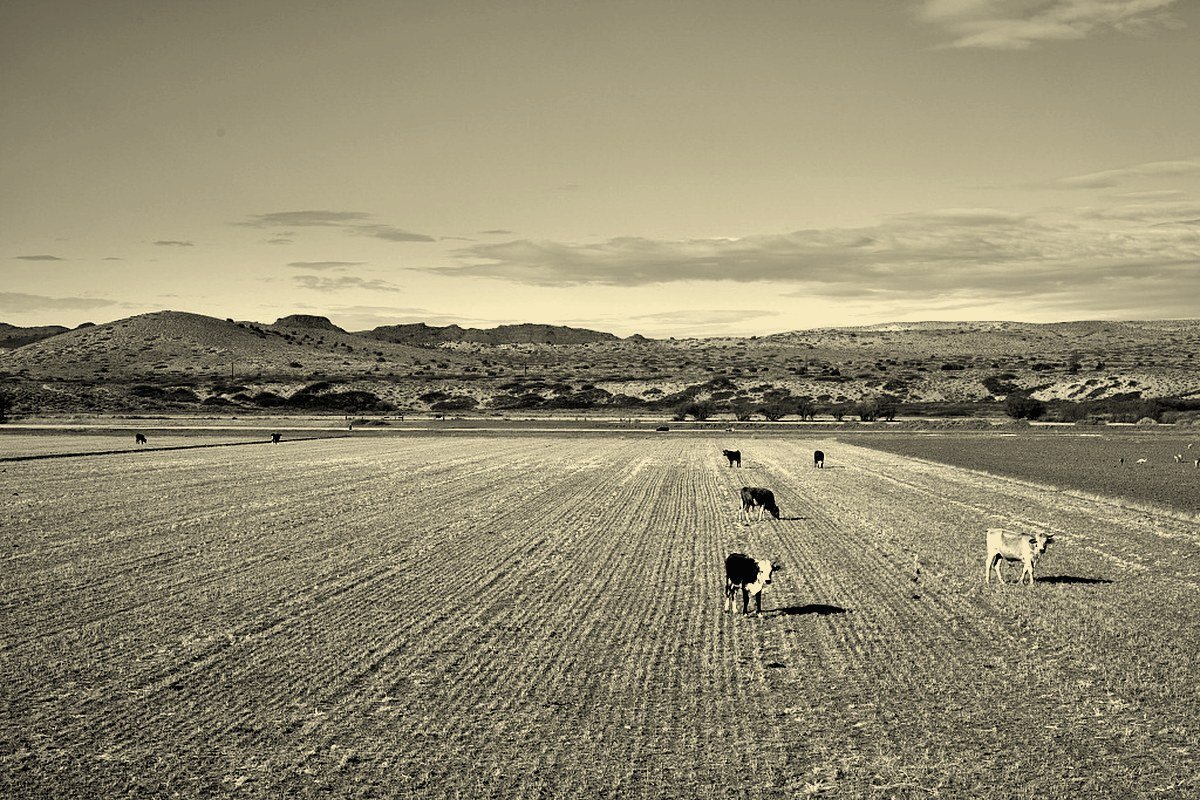
A Portales dairy or Mesilla Valley pecan grower that sells land to survive gets two bills: the lender’s, and next April’s tax on the gain. Chapter 12 bankruptcy in New Mexico is the one place Congress wrote a rule for that second bill: 11 U.S.C. § 1232 turns the tax on a sale of farm property into an ordinary unsecured claim that can be discharged.
Who qualifies for Chapter 12 bankruptcy in New Mexico?
Only a family farmer “with regular annual income” may file Chapter 12 under 11 U.S.C. § 109(f). For an individual or couple, § 101(18) requires debt under the cap, at least half of noncontingent, liquidated debt arising from farming, and more than half of gross income from farming in the prior year or in each of the second and third prior years. Section 101(21) includes dairy farming and ranching.
The Family Farmer Relief Act of 2019 set the cap at $10,000,000, and indexing raised it to $12,562,250 for cases filed on or after April 1, 2025 (90 Fed. Reg. 8941). H.R. 7730, which cleared Congress on September 28, 2026 and awaits the President, changes only the Subchapter V and Chapter 13 limits.
In In re Roberts, No. 18-11927-t11 (Bankr. D.N.M. Dec. 19, 2019), Curry County farmers trapped in Chapter 11 by the old cap converted after the increase. Under First National Bank of Durango v. Woods, 743 F.3d 689 (10th Cir. 2014), a loan is farm debt if its proceeds went directly into the farming operation.
What does a § 1206 sale do that a § 363 sale cannot?
Sales before a plan run under 11 U.S.C. § 363(b), and § 363(f) allows a free-and-clear sale on only five conditions. In Clear Channel Outdoor, Inc. v. Knupfer (In re PW, LLC), 391 B.R. 25 (B.A.P. 9th Cir. 2008), the panel reversed an order stripping an underwater junior lien, holding § 363(f)(3) unavailable when the price does not exceed the secured claims.
Section 1206 removes that veto in Chapter 12 for “farmland, farm equipment, or property used to carry out a commercial fishing operation,” with “the proceeds of such sale” remaining subject to the lien. The lender may still credit bid under § 363(k), and § 363(m) protects good-faith buyers, as the firm’s post on mootness in Tenth Circuit bankruptcy appeals explains.
A dairy herd is neither farmland nor equipment, so selling the cows free of a lien still runs through § 363(f). Under NMSA 1978, § 72-5-23, irrigation water is appurtenant to the land, and severing it takes State Engineer approval. A federal grazing permit creates no “right, title, interest, or estate” in the land under 43 U.S.C. § 315b, and BLM preferences transfer only with agency approval, per Stewart v. Kempthorne, 554 F.3d 1245 (10th Cir. 2009). No Tenth Circuit or D.N.M. decision on permits as estate property was located.
Thinking About Selling Ranch Land Under Financial Pressure? Contact Us Now
When does selling under a Chapter 12 plan beat a § 1206 motion?
A plan may provide for selling “all or any part of the property of the estate” under § 1222(b)(8), and In re Mongeau, 633 B.R. 387 (Bankr. D. Kan. 2021), read that provision to allow a full liquidation and found a Kansas couple who wound down before filing still eligible. Under § 1225(a)(5), a secured lender accepts, keeps its lien and receives at least the value of its allowed claim, or gets its collateral. For retained land, the rate is commonly argued under Till v. SCS Credit Corp., 541 U.S. 465 (2004), a Chapter 13 case whose plurality started from prime and added a risk premium.
Feasibility under § 1225(a)(6) requires reasonable assurance, not certainty; in In re Bright Harvesting, Inc., No. 15-11178 (Bankr. D.N.M. Dec. 4, 2015), a Melrose wheat and custom-harvest family won confirmation, with amendments, over its lender’s objection. A confirmed plan binds every creditor under § 1227. For a family farmer, 28 U.S.C. § 586(e) limits the standing trustee’s fee to 10 percent of the first $450,000 of plan payments and 3 percent after, and § 1226(c) lets the plan provide for payment other than through the trustee. No published Tenth Circuit decision on Chapter 12 direct payments was located.
What tax does a farm or ranch sale actually trigger?
Land used in the business for over a year is § 1231 property, as are dairy cattle held 24 months or more, and net § 1231 gain is taxed as long-term capital gain. Equipment gain up to prior depreciation is ordinary income under § 1245. Installment reporting under § 453 defers gain, but § 453(i) forces recapture into the sale year.
New Mexico taxes the same gain under NMSA 1978, § 7-2-3, at 5.9 percent on joint income above $315,000 under § 7-2-7. Section 7-2-34 allows the greater of $2,500 or 40 percent of up to $1,000,000 of gain “from the sale of a business,” a phrase it leaves undefined. Livestock sales are exempt from gross receipts tax under § 7-9-18, and § 7-9-62 halves the tax base on farm implements.
How did Hall v. United States leave farmers holding the tax bill?
Lynwood and Brenda Hall sold their farm in Chapter 12 and faced a $29,000 IRS claim on the gain. A 2005 provision, then § 1222(a)(2)(A), let plans treat such claims as nonpriority. In Hall v. United States, 566 U.S. 506 (2012), a 5-4 Court held the postpetition tax was not “incurred by the estate” under § 503(b), because 26 U.S.C. § 1399 makes a Chapter 12 estate no separate taxpayer. The tax was neither collectible in the plan nor dischargeable.
What does § 1232 do with the tax on a New Mexico farm sale?
Congress responded with section 1005 of the Bankruptcy Judgeship Act of 2017, Division B of Pub. L. 115-72. Section 1232(a) reaches any unsecured governmental claim arising, before the petition or after it but before discharge, from the “disposition of any property used in the debtor’s farming operation.” That claim is treated as prepetition and unsecured, loses § 507 priority, must be provided for in the plan, and is discharged under § 1228.
Section 101(27) defines “governmental unit” to include a State, so the Taxation and Revenue Department’s claim is covered too. When a postpetition return shows the claim, § 1232(d) requires notice at the address listed under § 505(b)(1), here the court’s register of governmental addresses, and the agency then has 180 days to file.
How does the math work for a Roosevelt County dairy?
A hypothetical Portales couple owing $9 million sells, in the first plan year, 320 acres (basis $600,000, price $2,400,000) and equipment (basis $150,000, price $700,000, cost above price). Assume no buildings, no prior § 1231 losses, an assumed 20 percent federal rate on the $1,800,000 land gain and 35 percent on the $550,000 of recapture. Federal tax is about $552,500; New Mexico at 5.9 percent, with only the $2,500 deduction, adds about $138,500. Total: roughly $691,000.
In Chapter 12, at an 8 percent unsecured dividend, the two agencies share about $55,000 and the rest is discharged. In Chapter 11, 26 U.S.C. § 1398 makes an individual’s estate a separate taxpayer, the federal tax is an administrative expense under § 503(b)(1)(B), and § 1129(a)(9)(A) demands cash on the effective date absent IRS agreement. Subchapter V is closed at $9 million; its limit is $3,424,000, or $7,500,000 if H.R. 7730 is signed. A smaller dairy there may pay administrative claims over time under § 1191(e), but in full. Roberts held that administrative claims keep that status after conversion, which argues for settling the chapter question before the sale closes.
| Issue | Chapter 12 | Chapter 11 (individual) | Subchapter V |
|---|---|---|---|
| Debt limit | $12,562,250 | None | $3,424,000 |
| Free-and-clear tool | § 1206 for land, equipment | § 363(f) or plan | § 363(f) or plan |
| Tax on sale gain | Unsecured, dischargeable | Administrative expense | Administrative expense |
| Example tax paid | About $55,000 | $552,500 federal, up front | Not eligible at $9M |
Frequently Asked Questions
Can a New Mexico dairy with $9 million of debt file Chapter 12?
Yes, if it meets the rest of § 101(18). For cases filed since April 1, 2025, the cap is $12,562,250. At least half of the liquidated debt must come from farming, and farm income must exceed half of gross income in the prior year or in each of the two years before.
Does § 1206 let a farmer sell cattle free and clear of the lender’s lien?
No. Section 1206 covers farmland, farm equipment, and commercial fishing property. A dairy or cow-calf herd is none of those, so selling the animals free of a lien over objection must satisfy one of the five conditions in § 363(f) or happen under a confirmed plan.
Is the capital gains tax on a farm sale in Chapter 12 always discharged?
No. Section 1232 covers claims arising before discharge, and the debtor generally must finish the plan to receive a § 1228 discharge. Gain recognized after discharge, such as later installment payments on a seller-financed sale, falls outside the statute and is owed in full.
Does § 1232 cover New Mexico state income tax on the sale?
Yes. Section 1232 applies to any “governmental unit,” and § 101(27) defines that term to include a State and its departments. A Taxation and Revenue Department claim on the sale gain is treated like the IRS claim: unsecured, without priority, and dischargeable on completion.
What if the farm was sold before the Chapter 12 was filed?
Section 1232(a) reaches claims arising before the petition as well as after, with no look-back period, so an otherwise priority tax can lose priority. The debtor must still qualify as a family farmer on the filing date, and under In re Mongeau a prepetition wind-down alone does not defeat that.
How North Star Law Firm Can Help
North Star Law Firm represents farm and ranch families weighing Chapter 12 bankruptcy in New Mexico against other bankruptcy options before a land or equipment sale, and models the tax the sale will generate. The firm also handles Chapter 11 and Subchapter V cases and business sale tax structuring.
Phillip Zagotti, JD/CPA, is admitted to the U.S. District Court and the U.S. Bankruptcy Court for the District of New Mexico. Related reading: the firm’s guide on which bankruptcy chapter fits a New Mexico business and its post on 1031 exchanges for ranches and water rights. The firm works alongside New Mexico-licensed counsel on state-law questions. To discuss a sale, contact North Star Law Firm.