
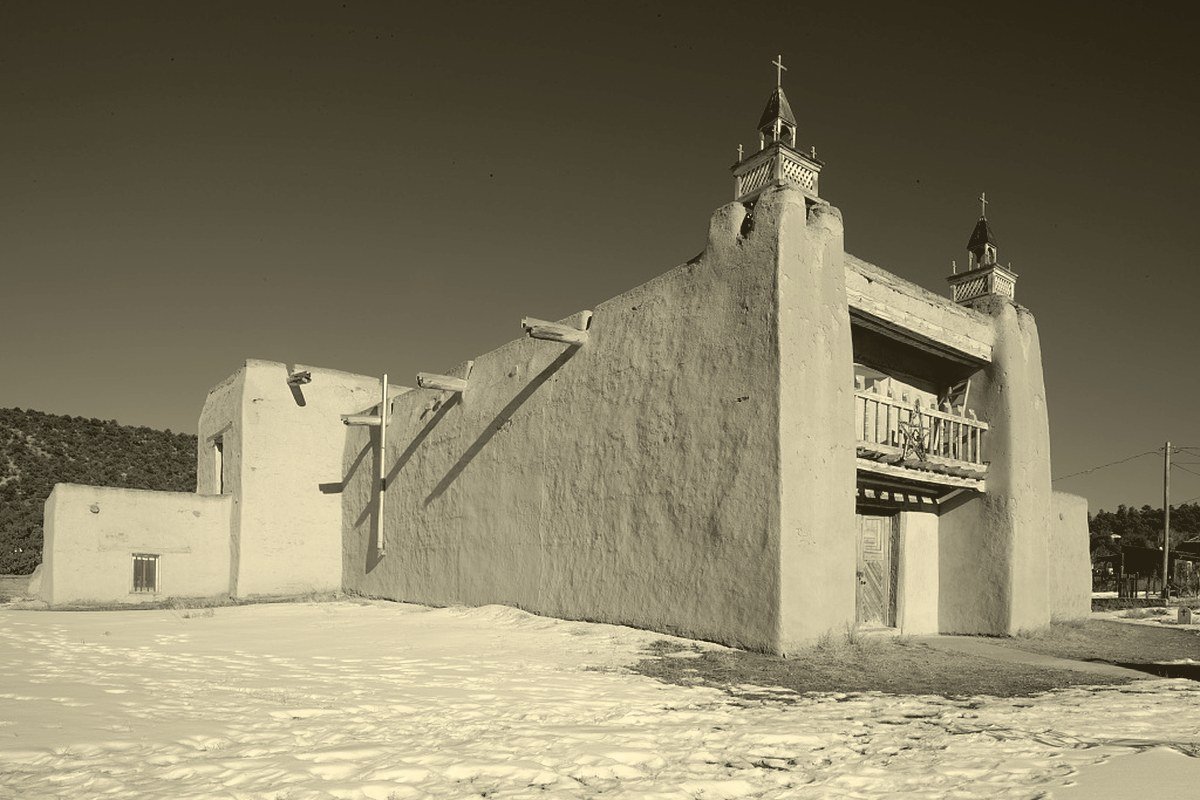
Lucinda is board treasurer of a youth-services charity in Farmington. It took in about $1.4 million in 2023, runs a thrift store, and rents its building from an LLC owned by one of its directors. In October 2026 IRS Exempt Organizations examinations wrote to schedule a visit about the 2023 Form 990, with an Information Document Request attached. The board meets Thursday.
A governance checklist will not help her now. Below is the procedure for an IRS audit of a nonprofit in New Mexico, with a section on church rules.
What kind of IRS exempt organization examination did our New Mexico nonprofit receive?
The IRS audit process page draws the line: a letter setting an appointment at your premises opens a field audit, and one asking you to mail documents opens a correspondence audit. Lucinda has the first kind. Under IRM 4.70.13, Publication 1 should come with the appointment letter, and the examiner will want a Form 2848 for any representative. Record requests come on Form 4564, the Information Document Request.
A compliance check is different. IRM 4.70.10.2 says “A compliance check is NOT an examination, and the taxpayer may legally choose not to participate.” Staff can still refer the case for examination, so I rarely ignore one. The fiscal year 2027 TE/GE program letter (Publication 5313, Rev. 10-2026) targets “abusive and prohibited transactions.”
Tax must be assessed “within 3 years after the return was filed” (26 U.S.C. § 6501(a)), and for § 4958 taxes the organization’s own annual return starts that period (§ 6501(l)(1)). If the 2023 Form 990 was filed May 15, 2024, the 2023 lease year stays open until May 15, 2027. Business income is murkier, since § 6501(g)(2) addresses an organization later held taxable, not a skipped Form 990-T. Examiners short on time ask for Form 872 (§ 6501(c)(4)); see whether to sign IRS Form 872.
What does the IRS look for in a Form 990 audit?
Under Treas. Reg. § 1.501(c)(3)-1, an organization fails if “more than an insubstantial part of its activities is not in furtherance of an exempt purpose” ((c)(1)) or if “its net earnings inure in whole or in part to the benefit of private shareholders or individuals” ((c)(2)), and it must serve “a public rather than a private interest” ((d)(1)(ii)). In my experience a single corrected deal draws excise taxes, not revocation.
The lease raises excise tax. An excess benefit exists where “the value of the economic benefit provided exceeds the value of the consideration” (26 U.S.C. § 4958(c)(1)(A)), and Treas. Reg. § 53.4958-4(b)(1)(i) values “the right to use property” at fair market value. An LLC more than 35 percent owned by an influential director is a disqualified person (§ 4958(f)(1), (f)(3); see Section 4958 after Jagannath). The lease also belongs on Schedule L, Part IV, under the current instructions (Rev. December 2024).
Payroll often rides along, especially whether tutors or drivers paid on 1099s are employees. For a classification determination, 26 U.S.C. § 7436 allows a Tax Court petition “before the 91st day” after the notice is mailed.
Nonprofit Got an IRS Exam Letter? Contact Us Now
Is a nonprofit thrift store taxed as unrelated business income?
Mostly no. The tax in 26 U.S.C. § 511(a)(1) uses the 21 percent corporate rate of § 11(b) and reaches a business “not substantially related” to the exempt purpose, but § 513(a)(3) excludes “the selling of merchandise, substantially all of which has been received by the organization as gifts or contributions.” Treas. Reg. § 1.513-1(e)(3) calls these “so-called thrift shops.”
Bought inventory is the weak spot. Under § 1.513-1(b) an activity stays a trade or business within “a larger aggregate of similar activities,” so closeout resales can be split out. No rule puts a number on “substantially all,” and I found no Tenth Circuit decision on a mixed store. Each unrelated business is computed separately (§ 512(a)(6)) after a $1,000 deduction (§ 512(b)(12)), and $1,000 of gross unrelated business income requires a Form 990-T (2023 instructions).
The lease produces no business income because the charity is the tenant; sublet rent would generally be excluded (§ 512(b)(3)(A)(i)) unless debt-financed (§ 514). New Mexico’s gross receipts exemption for 501(c)(3) organizations, NMSA 1978, § 7-9-29, excludes “receipts derived from an unrelated trade or business as defined in Section 513” (subsection (C)(1)).
Are churches audited differently under section 7611?
Yes. Under 26 U.S.C. § 7611(a), a church tax inquiry may begin only if an “appropriate high-level Treasury official reasonably believes (on the basis of facts and circumstances recorded in writing)” that the church may not be exempt or may owe tax, and only after written notice. Examining records takes a second notice at least 15 days later (§ 7611(b)). An inquiry must finish within 90 days of its notice, and an examination “not later than the date which is 2 years after the examination notice date” (§ 7611(c)(1)). A closed inquiry with no revocation, assessment or required change bars a repeat on similar issues for “the applicable 5-year period” (§ 7611(f)).
Who that official is remains untidy. Treas. Reg. § 301.7611-1, Q&A-1, still names “the appropriate Regional Commissioner,” a post eliminated after the 1998 IRS restructuring; a 2009 fix (74 Fed. Reg. 39003) was never finalized that I can find. IRM 4.70.19 (Nov. 22, 2023) delegates to the Commissioner of TE/GE, which United States v. Bible Study Time, Inc., No. 7:17-cv-02810 (D.S.C. Mar. 13, 2018), accepted. The Tenth Circuit has not decided it. God’s Storehouse Topeka Church v. United States, No. 23-3063 (10th Cir. Apr. 9, 2024), held only that § 7611 does not cover a third-party bank summons.
The protections exclude “separately incorporated church-supported schools or other organizations” (Q&A-3), so a parish school with its own charter is examined like Lucinda’s charity. Payroll is unsettled. Section 7611(i) never mentions it, the regulation treats withholding questions as routine requests outside the procedures (Q&A-4), and IRM 4.70.19.4(6) says the procedures apply to employment tax inquiries.
How does a Form 990 audit end, and where does a New Mexico charity appeal?
Many exams end with a no-change letter, an agreement form or a closing agreement (IRM 4.70.14). Otherwise comes a 30-day letter with the agent’s report; for proposed revocation, Letter 3618 with Form 886-A. Publication 556 requires a written protest in every exempt organization case, which sends it to the IRS Independent Office of Appeals.
Business income tax and § 4958 taxes follow deficiency procedures (§ 6211(a)): 90 days after a notice of deficiency to petition the Tax Court (§ 6213(a)), which sits in Albuquerque, then the Tenth Circuit (§ 7482(b)(1)). A revoked charity may seek a declaratory judgment under § 7428, filed before the 91st day after the final determination is mailed (see the firm’s Section 7428 post). Revocation can be retroactive if the organization “operated in a manner materially different from that originally represented” (Treas. Reg. § 601.201(n)(6)(i); see Rev. Proc. 2026-5). I found no 2025 or 2026 Tenth Circuit exempt organization decision.
A revocation also undercuts the § 7-9-29 exemption, and NMSA 1978, § 57-22-6 has charities register with the Attorney General, file their Form 990 there within six months after year-end, and above $500,000 in revenue obtain an independent CPA audit.
What could the exam cost Lucinda’s Farmington charity?
Illustration only. Say the store sold $180,000 of purchased closeout goods in 2023, netting $40,000, and no Form 990-T was filed. Taxable income is $40,000 less the $1,000 deduction, or $39,000; at 21 percent, tax is $8,190, plus interest.
The lease paid the director’s LLC $96,000 when comparable space rented for $60,000, a $36,000 excess benefit. If the director has substantial influence and owns over 35 percent of the LLC, the LLC owes the 25 percent first-tier tax, $9,000, on Form 4720. Directors who knowingly approved it owe 10 percent, $3,600, jointly and severally (capped at $20,000 by § 4958(d)(2)), unless participation “is not willful and is due to reasonable cause.” Uncorrected, the LLC faces a 200 percent second-tier tax: $72,000.
Under Treas. Reg. § 53.4958-7, the LLC repays $36,000 in cash, not by promissory note, plus interest at least at the applicable federal rate, compounded annually. Rent for 2024 onward needs resetting too. With reasonable cause and timely correction, § 4962 allows abatement of the first-tier taxes.
| Exam outcome | Who is liable | Forum to contest | Deadline to respond |
|---|---|---|---|
| No change | No one | None | None |
| UBIT deficiency | The charity | Appeals, then Tax Court (Albuquerque) | 30-day letter; 90 days after notice of deficiency |
| § 4958 excise tax | Disqualified person; knowing managers | Appeals, then Tax Court | 30-day letter; 90 days after notice |
| Employment tax | The charity | Appeals; Tax Court under § 7436 for classification | 30-day letter; before 91st day after § 7436 notice |
| Revocation | The charity | Appeals; § 7428 in Tax Court, Court of Federal Claims or D.D.C. | 30-day letter (Letter 3618); before 91st day after final determination |
Frequently Asked Questions
Is an IRS compliance check the same as an audit?
No. The IRS manual says a compliance check is not an examination and participation is optional, though staff can refer the case for one.
How far back can the IRS examine a nonprofit’s Form 990?
Generally three years from filing, which also covers that year’s § 4958 taxes. A signed Form 872 extends the period, and a missing Form 990-T can leave business income open.
Does a thrift store make a New Mexico charity pay tax?
Donated-goods sales fall within § 513(a)(3). Resold purchased merchandise can be unrelated business income taxed at 21 percent, and § 7-9-29 does not exempt unrelated business receipts.
Can the IRS audit a church in New Mexico?
Yes, under § 7611: a written reasonable belief by a high-level official, advance notice, and 90-day and two-year limits. A separately incorporated church school is not covered.
Who pays the § 4958 tax, the charity or the insider?
The insider owes 25 percent of the excess benefit, and knowing managers owe 10 percent, capped at $20,000. The charity owes none.
How North Star Law Firm Can Help
North Star Law Firm represents New Mexico charities, boards and insiders in IRS audit defense, from the first document request through IRS Appeals and Tax Court litigation.
Phillip Zagotti, JD/CPA, represents taxpayers before the IRS and the U.S. Tax Court and is admitted to the U.S. District Court and Bankruptcy Court for the District of New Mexico. The firm works alongside New Mexico-licensed counsel on state-law questions. If your nonprofit or church has an IRS exam or compliance check letter on the table, contact North Star Law Firm.