
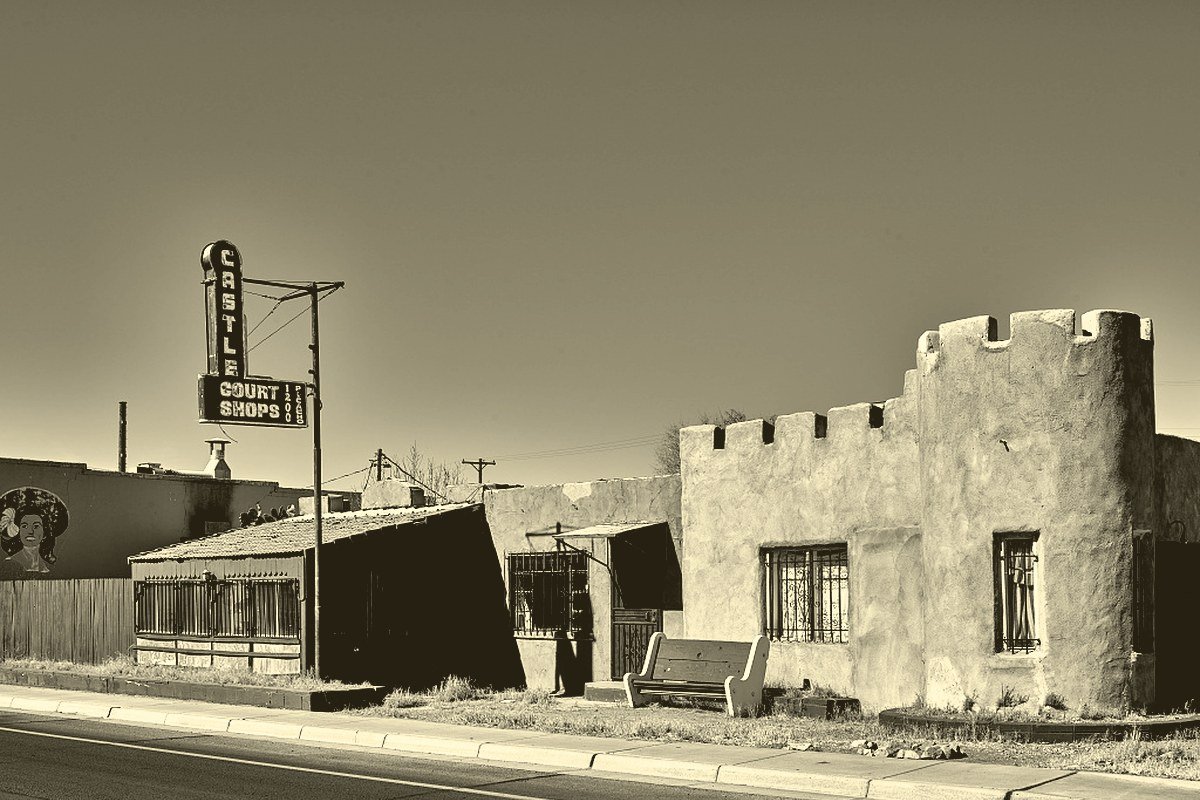
Teodoro’s LLC owns a 48-unit apartment complex near New Mexico State University in Las Cruces. The $5.1 million bank loan carries an assignment of rents and a balloon that matured in August 2026, and the refinance never closed. Last week every tenant got a letter from the bank: pay rent to us, not the manager. Payroll is due Friday.
Teodoro is fictional, but owners of one New Mexico rental property often ask me his question: in Chapter 11, can the building run on its own rents? Often it can. The LLC needs the bank’s agreement or a judge’s approval, and it must watch a separate clock that starts on the filing date.
Can a New Mexico landlord use rents in Chapter 11 despite an assignment of rents?
Not without permission. 11 U.S.C. § 363(a) defines cash collateral to include rents “subject to a security interest as provided in section 552(b).” Section 363(c)(2) bars a debtor in possession from spending it unless every entity with an interest consents or the court authorizes it after notice and a hearing. Section 363(c)(4) also requires the LLC to “segregate and account for” the rent.
The lien survives the filing because of 11 U.S.C. § 552(b)(2). If the prepetition security agreement covered the property and its rents, the lien reaches postpetition rents “to the extent provided in such security agreement,” unless the court, “based on the equities of the case, orders otherwise,” and it applies “notwithstanding section 546(b).” Whether a valid rent interest existed is a state-law question under Butner v. United States, 440 U.S. 48 (1979).
Does a bank’s letter to New Mexico tenants mean the rents now belong to the bank?
No. New Mexico’s Uniform Assignment of Rents Act, NMSA 1978, §§ 56-15-1 to 56-15-19, took effect January 1, 2012. Under § 56-15-4(B), an assignment creates “a presently effective security interest” in rents “regardless of whether the document is in the form of an absolute assignment.” Under § 56-15-5(B), recording with the county clerk fully perfects it, before any default or receiver.
The letter is enforcement. Under § 56-15-9, once a tenant receives a compliant notice after default, the tenant must pay the lender. If the owner collects anyway, § 56-15-14(B) requires turnover, but “the assignee continues to have a security interest in the proceeds.” Enforcement changes who collects. It does not turn a lien into ownership.
Rent the bank received before the petition is the bank’s to apply under § 56-15-12. Rent arriving after filing is estate property subject to a perfected lien, which is cash collateral, and further demands on tenants run into the stay on acts to “exercise control over property of the estate” and to enforce liens, 11 U.S.C. § 362(a)(3) and (4). I found no Tenth Circuit, Tenth Circuit BAP or D.N.M. decision applying the New Mexico act in bankruptcy, so this reading rests on the statute’s text.
What is the single asset real estate clock under section 362(d)(3)?
11 U.S.C. § 101(51B) defines single asset real estate as one property or project, other than residential property with fewer than four units, producing substantially all the debtor’s gross income, with no substantial business beyond operating it. In In re Kachina Village, LLC, No. 15-10140-t11 (Bankr. D.N.M. Sept. 15, 2015), Judge Thuma applied it as a three-part test. Teodoro’s LLC meets every part.
Under § 362(d)(3), the lender gets stay relief unless, by the later of 90 days after the order for relief or 30 days after the court finds the debtor is SARE, the debtor files a plan “that has a reasonable possibility of being confirmed within a reasonable time” or starts monthly payments of interest “at the then applicable nondefault contract rate” on the value of the creditor’s interest. A voluntary filing is the order for relief (§ 301(b)). Extending the 90 days for cause takes an order entered inside that window. Section 362(d)(3)(B)(i) lets the payments come from rents “notwithstanding section 363(c)(2).”
In Kachina Village the court set the payments at the 5.5 percent contract rate, not the 16 percent default rate (see the firm’s post on default interest in bankruptcy). In In re Mountain Edge LLC, No. 12-10835 t11 (Bankr. D.N.M. Oct. 10, 2012), a filed plan did not stop the clock because it looked unconfirmable on its face.
Subchapter V is closed to Teodoro. Section 101(51D)(A) excludes “a person whose primary activity is the business of owning single asset real estate,” and the debt limit has been $3,424,000 since April 1, 2025. H.R. 7730 passed the House on September 16, 2026 and the Senate without amendment on September 28, 2026; as of October 30, 2026, congress.gov shows no signature or public law. It would raise the limit to $7.5 million for later cases but keeps the SARE exclusion. Ordinary Chapter 11 also carries quarterly U.S. Trustee fees under 28 U.S.C. § 1930(a)(6).
Lender Froze Your Rents? Contact Us Now
What does adequate protection under section 361 require for New Mexico cash collateral?
Under § 363(p), the debtor “has the burden of proof on the issue of adequate protection”; the lender proves “the validity, priority, or extent” of its interest. Section 361 offers cash payments, replacement liens, or the “indubitable equivalent.” Teodoro’s lender is undersecured, and United Savings Ass’n v. Timbers of Inwood Forest Associates, Ltd., 484 U.S. 365 (1988), denies undersecured creditors compensation for delay, so the task is protecting collateral value.
The Tenth Circuit calls adequate protection a concept decided “flexibly on the proverbial ‘case-by-case’ basis,” MBank Dallas, N.A. v. O’Connor (In re O’Connor), 808 F.2d 1393 (10th Cir. 1987). In In re S-Tek 1, LLC, No. 20-12241-j11 (Bankr. D.N.M. Dec. 11, 2020), Judge Jacobvitz held a debtor “is not required to pay ongoing debt service” to use cash collateral if the lender is otherwise protected, while repeating that the debtor “must prove” that protection.
Proof is where owners lose. In In re Broadway Realty I Co., LLC, No. 25-11050 (Bankr. S.D.N.Y. June 29, 2025), 82 New York apartment owners were denied final use without prejudice. Their budget had no breakdown building by building, though one existed, and nobody could itemize the professional fees. The lender later consented, and a liquidation plan confirmed in January 2026 approved a sale of the buildings.
Fed. R. Bankr. P. 4001(b), restyled December 1, 2024, requires a proposed order and a summary of five pages or less. A final hearing may begin no earlier than 14 days after service; before then, only cash “necessary to avoid immediate and irreparable harm to the estate” may be used. NM LBR 4001-3 (effective December 1, 2025) adds insider ties, a cash flow projection with “a proposed line-item expense budget,” the debt, and the collateral’s value. The court’s cash collateral procedures want weekly interim budgets, then monthly, a 21-day objection period on the final order, and a sworn declaration.
I usually propose replacement liens on postpetition rents, proof that taxes and insurance are current, monthly budget-to-actual reports, and a carve-out for U.S. Trustee fees and professionals. Lenders answer with stay relief under § 362(d)(1) or (d)(2), arguing no “reasonable possibility of a successful reorganization within a reasonable time” under Timbers, or dismissal under § 1112(b), which counts “unauthorized use of cash collateral substantially harmful to 1 or more creditors” as cause. On good faith, see the firm’s post on bad faith Chapter 11 filings in the Tenth Circuit.
Can Teodoro’s rents cover the section 362(d)(3) payment?
Illustration only. Forty-eight units at $1,150 yield $55,200 a month. Operating costs run about $21,000, with tax and insurance escrows of roughly $3,800 and $2,400. The LLC files Tuesday, November 10, 2026, and the court values the bank’s interest at its $4.6 million appraisal.
The payment is $4,600,000 times 6.75 percent, divided by 12: $25,875 a month. Outflow totals $53,075, leaving $2,125. At 95 percent occupancy, gross rent drops to $52,440 and the month ends $635 short. Quarterly disbursements near $159,000 add a U.S. Trustee fee of about $637 (0.4 percent under § 1930(a)(6)(B)), with nothing reserved for counsel. The interest route needs a full building, so Teodoro should aim to file a plan with a real chance of confirmation by Monday, February 8, 2027, day 90.
The budget should list rent by unit type with vacancy, payroll, the management fee (and any insider tie), utilities, repairs, escrows, interest and professional fees, each tied to last year’s statements.
| Debtor’s request | Statute or rule | What the debtor must prove | What the lender typically demands |
|---|---|---|---|
| Interim use | § 363(c)(3); Rule 4001(b)(2) | Necessity; likely success at the final hearing | Short period, weekly budget |
| Final use | §§ 363(c)(2), (e), (p); NM LBR 4001-3 | Adequate protection, with a line-item budget | Budget covenants, reporting, default triggers |
| § 362(d)(3) payments | § 362(d)(3)(B) | Nondefault-rate interest on the value of the lender’s interest | A higher valuation |
| Replacement liens | §§ 361(2), 552(b)(2) | Liens cover any decline in value | Liens on postpetition rents |
| Fee carve-out | 28 U.S.C. § 1930(a)(6); § 506(c) | Fees are budgeted and reasonable | A cap and a § 506(c) waiver |
Frequently Asked Questions
Are rents cash collateral if my New Mexico lender never appointed a receiver?
Usually, if the assignment was recorded. NMSA § 56-15-5(B) perfects on recording, and § 552(b)(2) carries the lien to postpetition rents.
Can my lender keep collecting from my tenants after I file Chapter 11?
Not without stay relief or an agreement, because § 362(a) bars acts to control estate property or enforce liens. Rent received before filing generally stays with the lender.
Can the owner of one apartment complex use Subchapter V?
Not if the business mainly owns single asset real estate. H.R. 7730, if signed, keeps that exclusion.
What interest rate applies to section 362(d)(3) payments?
The nondefault contract rate, applied to the value of the lender’s interest. In Kachina Village that was 5.5 percent, not 16 percent.
How soon after filing can I use rent money?
A preliminary hearing can come within days, limited to preventing immediate and irreparable harm. The final hearing waits at least 14 days after service.
How North Star Law Firm Can Help
North Star Law Firm represents income property owners in Chapter 11 cases in the District of New Mexico, handles Subchapter V cases where the business qualifies, and advises on the tax side of a real estate workout or sale.
Phillip Zagotti, JD/CPA, is admitted to the U.S. District Court and Bankruptcy Court for the District of New Mexico and represents taxpayers before the IRS and the U.S. Tax Court. The firm works alongside New Mexico-licensed counsel on state-law questions. If your loan has matured or your lender has written to your tenants, contact North Star Law Firm.